Bee Patterns: A Design That Never Really Goes Out of Style
Polka dots, gingham and stripes are some of those patterns that keep coming back, year after year. But there is another one that I think belongs on that list, even though we rarely talk about it: bees.
Once you start paying attention, bee patterns seem to be everywhere. They appear on mugs and teapots, fabrics, wallpaper, stationery, jewellery, beauty packaging and children’s products. Sometimes the bees are quite realistic. Sometimes they are simply tiny yellow and black insects with little blue wings.
And somehow, the pattern rarely feels completely out of date. It can look traditional on a piece of pottery, cute on something made for children, then appear again a few years later on modern personal care packaging.
That made me curious. How long have bees actually been used in decorative design, and why does this little insect keep finding its way onto so many different things?
Quick Answer: Why Are Bee Patterns Timeless?
Bee patterns have been used in decorative design for centuries. Bees have appeared as historical symbols, including during Napoleon’s French Empire, and later became recurring motifs in jewellery, British pottery, wallpaper, textiles and everyday products. Their recognizable shape and associations with nature, flowers, honey and pollination make them easy to adapt to both traditional and modern design.
Where Did the Bee Pattern Come From?
Bees have been used as symbols for centuries, so their place in design goes much further back than simply being a cute illustration.
One of the easiest historical examples to recognise comes from the Napoleonic era. The bee became one of the symbols of Napoleon’s Empire and was used to connect his new dynasty with the early origins of the French monarchy.


Fondation Napoléon explains that small gold objects discovered in the tomb of Childeric I in 1653 were interpreted at the time as bees, although they are now thought to have actually represented cicadas. Within Napoleonic symbolism, the bee later became associated with immortality and resurrection.
The motif was not limited to emblems either. Napoleon’s imperial mantle was made from red velvet decorated with golden bees, and they can be seen scattered across his robes in several coronation portraits.
So the idea of using lots of small bees as a repeating decorative motif has a surprisingly long history.

By the late nineteenth and early twentieth centuries, bee illustrations were also becoming increasingly common on honey labels, packaging and materials related to beekeeping. Compared with more decorative bee motifs, these commercial illustrations often showed bees in a more naturalistic way, with visible wings, segmented bodies and clearly defined abdominal stripes.
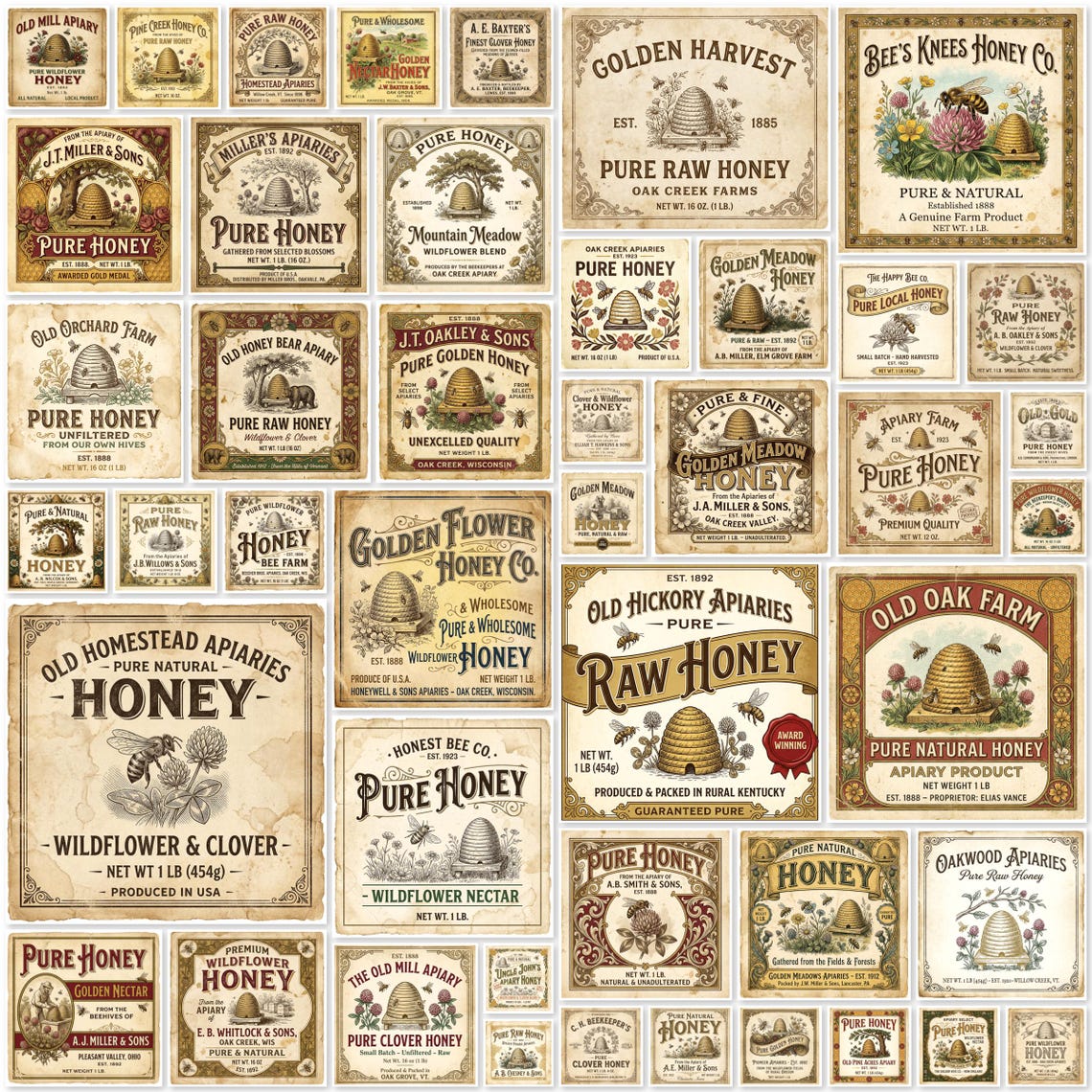
Bees later appeared in many other forms of design. There are examples in nineteenth-century British jewellery too. The British Museum has a gold bee brooch dating from around 1870. Interestingly, the museum notes that the bee in jewellery of this period may have represented industry, referring to the hardworking nature traditionally associated with bees.
See the nineteenth-century bee brooch at the British Museum
From British Pottery to Wallpaper
In more contemporary design, British pottery gives us some very recognisable examples.
Emma Bridgewater has used Bumblebee designs across mugs and other tableware, and Bumblebees has appeared among the company’s many recognisable patterns.
What I find particularly interesting is when bees are mixed with another familiar pattern. Emma Bridgewater has combined Bumblebees with Polka Dot, putting two completely different motifs together on the same pieces.
That is a good example of how a bee can move beyond being a picture of an insect printed on a mug. Once repeated and combined with other elements, it becomes a pattern in its own right.
See more Emma Bridgewater Bumblebee designs on Amazon.
And bees certainly don’t stop at the kitchen cupboard.
Timorous Beasties has used bees as a repeating motif on its Honey Bee Wallpaper, while the Royal Botanic Gardens, Kew shop has featured bee-themed products across categories including homeware, accessories, stationery and jewellery.
Once you start looking for them, bees really are everywhere.
Why Do Bee Patterns Work So Well in Design?

I think there are a few reasons.
First, a bee is easy to recognise even when the illustration is tiny. Its striped body, wings and contrasting colours remain visible when lots of little bees are repeated across a surface.
Second, bees already have strong visual connections with nature, flowers, honey and pollination. Because those associations are so familiar, a bee illustration can immediately give something a botanical or nature-inspired feel.
But I wouldn’t automatically assume that something decorated with bees is sustainable. A bee is still a design element. Whether a product is actually more sustainable depends on how it is made, what materials are used and how the product itself is intended to be used.
Bee patterns are also surprisingly easy to mix with other designs. Emma Bridgewater has paired bees with polka dots, while elsewhere we often see them placed among flowers and plants.
Another thing I like about them is how easily their character can change.
A detailed illustration can feel botanical or cottage-inspired. Make the same bee simpler, rounder and more colourful, and suddenly it becomes playful enough for children’s products.
Where Can You Find Bee Patterns Today?
Almost anywhere.
Mugs, teapots and tableware are probably some of the easiest examples to find, but there is also stationery, wrapping paper, wallpaper, cushions, home textiles, jewellery, personal care packaging and all sorts of small accessories.
Bees also have a long history in the beauty world. Guerlain, for example, has been associated with the bee since the nineteenth century, when the motif appeared on its Bee Bottle created for Empress Eugénie in 1853. The connection continues today through the house’s Abeille Royale skincare line.
That is why I don’t really see the bee pattern as belonging to one particular product category or trend. It simply keeps reappearing in different forms.
Disclosure: The Wild products featured below were sent to me free of charge for review. This section contains affiliate links, which means I may receive a commission if you make a purchase through my links, at no additional cost to you. All opinions and experiences shared are based on my and my family’s actual use of the products.
Wild x Emma Bridgewater Bumblebee: A Classic Pattern on a Refillable Deodorant
This is actually what made me start paying more attention to bee patterns in the first place.
Wild sent me several products to try, including the Wild x Emma Bridgewater Bee Case. And just to clarify what you see in my photograph, the bee figurine isn’t part of the Wild package. That’s mine and I added it to the picture.
The Wild and Emma Bridgewater collaboration first appeared in 2024, bringing Emma Bridgewater’s recognisable Bumblebee pattern to Wild’s reusable deodorant case.
The case has a cream background covered with small bees. For me, it is a good example of exactly what I was talking about earlier. A pattern that looks perfectly at home on British pottery can be transferred to personal care packaging and still work.
What Did Wild Send Me?
My package included the Emma Bridgewater Bee deodorant case, a mini deodorant with the same Bumblebee design, a Fresh Cotton & Sea Salt deodorant refill, a Pear Blossom deodorant refill and a Hibiscus & Coconut lip balm refill.
Everything shown in my photograph was sent by Wild except for my bee figurine.
And yes, I have tried all of them.

Using the Wild Emma Bridgewater Bee Deodorant Case
I was already using Wild before receiving this package, so the deodorant formula itself wasn’t completely new to me. What was different this time was the Emma Bridgewater case.
The case feels light in my hand and changing the refill is straightforward. It is easy to open, the deodorant twists up and down without much effort, and putting a new refill inside doesn’t involve a complicated process.
I tried both Fresh Cotton & Sea Salt and Pear Blossom from this package.
Wild describes Fresh Cotton & Sea Salt as having the scent of clean laundry with a seaside breeze. That is Wild’s description of the fragrance rather than my own scent notes.
For me, though, the more important question isn’t simply how a deodorant smells.
Does it actually do its job?
In our experience, yes.
I use Wild myself, and my sons Caesar and Milan use it too. They are going through puberty and are active with outdoor sports, so their deodorant gets a rather more demanding test than sitting quietly at home all day.
For us, Wild has been effective at controlling body odour. It feels light when applied, we haven’t noticed stains on our clothes, and none of us has experienced irritation from the products we use.
Of course, that is our experience. Skin sensitivity and reactions to fragrance or deodorant ingredients can be very different from one person to another.
Wild lists ingredients including tapioca starch, sunflower seed wax, cocoa seed butter, coconut oil, shea butter, magnesium hydroxide and zinc ricinoleate in its regular stick deodorant formula. The regular formula also contains sodium bicarbonate, while Wild says its sensitive range is formulated without it.
If you know that your skin reacts to baking soda, fragrance or other deodorant ingredients, I would check the ingredient list for the exact refill you are considering rather than assuming that it will suit you simply because it works well for us.
Is There Anything I Don’t Like About Wild Deodorant?
Yes, and this is something I can talk about from longer-term use rather than from trying a single refill once.
I find Wild deodorant refills quite soft compared with some other stick deodorants.
After using them for a while, some of the deodorant can collect around the inside of the case. Eventually I have to scrape out and clean away the residue. Unfortunately, that also means some of the product ends up being wasted instead of used.
I’ve noticed a similar issue with the mini deodorant. There can still be some deodorant left when the mechanism can no longer twist it any further upwards, so a small amount remains that I can’t really use.
There is another issue I’ve experienced after repeatedly changing refills.
With some Wild cases I’ve used, the part supporting the refill has eventually come loose after several rounds of removing and replacing cartridges. Once that happened, I had to replace the case.
I think that’s worth mentioning because one of the main ideas behind Wild is the reusable case.
I like the refill concept, and installing a new refill really is easy. But based on my longer-term experience, I think there is still room for improvement in both the softness of the deodorant and the durability of the refill mechanism.
What About the Wild Mini Deodorant?
The mini version is much simpler.
I like the size because I can easily put it inside my makeup bag. I don’t always want to carry a full-sized deodorant case just to have deodorant with me while I’m out.
That makes the mini genuinely useful for me rather than simply being a smaller, cute version of the regular product.
The drawback is the same one I mentioned earlier. Because the deodorant itself is quite soft and the mechanism can’t push every last bit of product out, some deodorant can remain inside when it is effectively finished.
Wild Hibiscus & Coconut Lip Balm
I also tried the Hibiscus & Coconut Lip Balm.
The first thing I noticed was the texture. It feels light on my lips while still leaving them feeling moisturised. I don’t get that heavy feeling that some lip products can leave behind.
Wild uses a refill system for its lip balm as well, so the outer case can be kept while the refill inside is replaced.
The packaging of the Hibiscus & Coconut refill I received states 98% natural origin and mentions shea butter and coconut oil.
Ingredients and formulations can change, so I would still recommend checking the current product page and packaging if a particular ingredient is important to you.
Is the Wild x Emma Bridgewater Bee Case Worth Buying?
I think this depends quite a lot on why you want it.
If you already use Wild and need another case, the Emma Bridgewater version is particularly appealing if you like its design.
The deodorant formula I used feels the same as the Wild deodorant I was already using. So I wouldn’t buy the Bee Case expecting the deodorant itself to perform differently simply because the case is a collaboration.
If you like Emma Bridgewater, bee patterns or everyday objects with a playful design, then the case has that extra appeal.
On the other hand, if you already own a Wild case that works perfectly well and you don’t particularly care about having a different pattern, there isn’t a functional reason to replace it just because another design is available.
And because collaboration designs can come and go, I also wouldn’t make the decision based solely on one limited pattern. If the Bumblebee case is no longer available when you read this, Wild has other reusable case designs, while Emma Bridgewater continues to use bee motifs across its own products.
Where to Buy Wild
The Emma Bridgewater Bee Case is a collaboration design, so availability can change. Check Wild directly to see which cases, deodorant refills and lip balm refills are currently available.
How to Use Bee Patterns in Your Home
You don’t need to fill a room with bees to make the pattern noticeable. I actually think it works better in smaller doses.
- Start with one focal piece.
A bee-patterned mug, cushion, tin or decorative object can be enough.
- Treat it like polka dots or gingham.
It doesn’t need to match everything else in the room.
- Pair it with quieter colours.
Cream, navy, soft blue and muted yellow work particularly well without competing with the pattern.
- Mix patterned and plain pieces.
If the bee design is already busy, I prefer placing it next to simpler objects rather than filling an entire shelf with the same motif.
- Use what you already have.
Bee patterns don’t have to mean buying something new. Fabric, old ceramics, illustrations or other pieces already at home can work just as well.
Final Thoughts
After looking into its history and all the different places it has appeared, I understand even more why the bee pattern keeps coming back.
Bees have been used as imperial symbols, appeared in nineteenth-century jewellery, and later found their way onto pottery, wallpaper, stationery and everyday objects. Today, the same little insect can even appear on a reusable deodorant case.
Perhaps that’s exactly why the pattern has lasted so well. A bee is instantly recognisable, can look traditional or playful depending on how it is illustrated, and doesn’t really belong to just one type of product.
And after writing all of this, I have a feeling I’m going to start spotting little bees on even more things than I did before.
Frequently Asked Questions About Bee Patterns
A: The meaning depends on the period and context. Bees have historically been associated with ideas including industry, hard work and immortality. They also have obvious connections with nature, flowers, honey and pollination. A bee motif does not automatically mean that a product is sustainable.
A: Napoleon adopted the bee as one of the symbols of his Empire to create a connection between his new dynasty and the earliest rulers of France. Small gold objects discovered in the tomb of Childeric I were believed at the time to represent bees, although they are now generally interpreted as cicadas.
A: No. Bee imagery has appeared in different cultures and periods, so the bee pattern itself is not exclusively British. However, it has become familiar in contemporary British decorative design through pottery, wallpaper, textiles and other homeware.
A: Emma Bridgewater has used Bumblebee designs across its pottery and other products. Individual pieces, colours and collections can change, so it is best to check the current Emma Bridgewater collection for availability.
A: Yes. The outer Wild deodorant case is designed to be kept and used with replacement deodorant refills. The Emma Bridgewater Bee version changes the exterior design rather than the basic refill system. Limited-edition and collaboration case availability can change.
Collaboration note: This article is open to relevant partnerships, including practical products. All collaborations must fit naturally within the story and provide useful information for readers. Work with Twinkle So Bright
You May Also Like
- Why Winnie the Pooh Never Gets Boring After 100 Years
- What Is Always on My Desk While Writing and Blogging
- Started Blogging in 2019. Would I Still Do It Today?
- Our Morning at Batu Caves
My Discount Codes
A little extra for Twinkle So Bright readers. Here are my current discount codes for brands I work with.
Wild
Get 20% off your first Wild order with code TWINKLEWILD.
Shop Wild
Promeed
Get 15% off with my code PUSPITA2026.
Shop Promeed
AirZlink eSIM
Get 30% off in the AirZlink eSIM app with code BRIGHT.
Get AirZlink eSIM
You May Also Like

Loh Liang Komodo Island: The Day We Met the Dragons
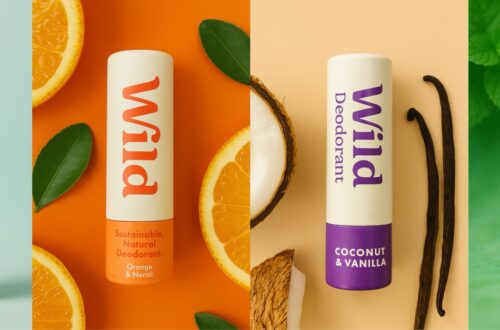
Wild Deodorant Review: Natural, Vegan and Truly Effective