

Nasi en Stamppot in Komodo Island: Meeting the Dragons at Loh Liang with East Cruise
Quick Answer:
Komodo dragons are the world’s largest living lizards, found only in Indonesia, mainly on Komodo Island, Rinca, Gili Motang, and Flores.
These reptiles can reach three meters long and weigh over 70 kilograms. They are powerful predators, hunting deer, wild boars, and even water buffalo using a mix of strength, venom, and bacteria in their bite.
On August 11, 2025, Nasi en Stamppot finally met these legendary creatures face-to-face at Loh Liang, Komodo National Park, guided safely by East Cruise and local ranger Mr. Kardin.
Before the Dragons
Our journey began in Labuan Bajo, after a short flight from Surabaya.
From the harbor, we joined East Cruise, a full-day private tour visiting Padar Island, Pink Beach, Loh Liang (Komodo Island), Taka Makasar, Siaba Bay, and Manta Point.
After climbing hundreds of steps on Padar Island and swimming in the beautiful clear waters of Pink Beach, we continued our trip to Loh Liang, home of the ancient dragons.
The speedboat left Pink Beach around 12:16 PM, and by 12:45 PM, we saw Komodo Island’s rugged hills rising ahead.
Welcome to Loh Liang Komodo National Park
When our boat stopped at the jetty, we could already sense the wildness of the island. From the dock, it took about six minutes to walk or about three hundred meters to the entrance gate.
Our guide Vicky from East Cruise joined us, bringing lunch boxes for later. That small attention meant a lot after a long morning of climbing and swimming. Thank you, Vicky and East Cruise, for making sure we didn’t get hungry
Loh Liang is one of the official entrances to Komodo National Park, a UNESCO World Heritage Site and one of the New Seven Wonders of Nature (2012). At the gate, Vicky introduced us to Mr. Kardin, our ranger for the day.
Every visitor must be accompanied by a ranger for safety. Komodo Island is home to snakes, wild boars, monkeys, and deer, so walking alone is never allowed.
Smoking and wandering off alone are strictly prohibited and for good reason. Komodos can move fast when disturbed, and four fatal attacks have been recorded here, all involving people who walked without a ranger.
First Komodo
We were lucky. After just a few minutes, we saw our first Komodo, a male resting under a tree. His thick neck, broad head, and long tail looked powerful, yet calm. His skin blended perfectly with the dry ground and fallen leaves.
Mr. Kardin reminded me to tell Caesar and Milan to calm down and not make a sudden movement which can make the Komodo shock and can cause them to chase us.
He taught us something interesting:
“Komodo dragons don’t pay much attention to what’s behind them. They only focus on what’s in front.”
That’s why rangers always stand in front of the Komodo to control the situation, while visitors stay behind at a safe distance.
Mr. Kardin gave us clear instructions to always stay behind him and the Komodo, as the dragons only react to movement in front of them. As an expert, he helped take photos of us one by one with our first Komodo on the island.
A few steps later, another male komodo appeared, but Mr. Kardin warned us that it seemed less friendly and co-operative. He acted uncomfortable and moved his head a bit rough and acted too alert with the situation. So Mr Kardin brought us to move from him.
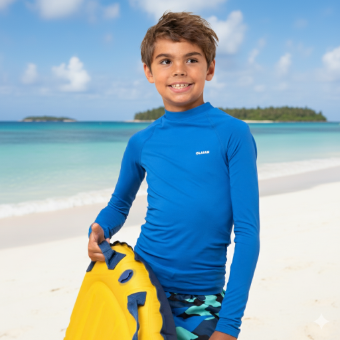
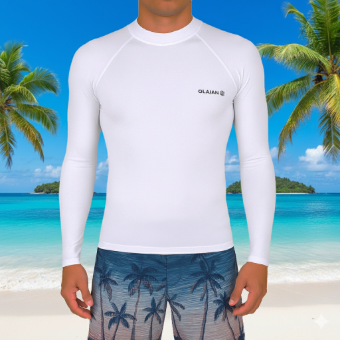
Our Favorite Travel Outfit
The long-sleeve swimsuits we wore in this video protected us from the strong Komodo Island sun and stayed comfortable both on land and in the water.
Perfect for those allergic to sunscreen.
Shop our UPF 50+ swimsuits here:
https://www.twinklesobright.com/product-tag/decathlon/

The Legend of the Dragon Princess
The rangers on Komodo Island are locals who believe they are spiritually connected to the dragons.
They are all locals who truly belong to the island, not visitors or workers from other parts of Indonesia.
Each ranger carries a wooden stick and is highly trained to watch every movement of the Komodos. As long as visitors follow their instructions, Alhamdulillah, no serious incidents have ever happened.
According to stories passed down from generation to generation, they believe that they are the twins of the Komodo dragons. That is why they share a special connection and deep respect for these ancient creatures.
Long ago, local people believed that Komodos were the twin siblings of humans.
A princess named Putri Najo gave birth to twins, a human boy, Gerong, and a Komodo dragon named Orah.
Separated at birth, they met years later during a hunt. When Gerong almost attacked Orah, their mother appeared in a vision, saying,
“Do not harm her, she is your sister.”
Since then, the people of Komodo Island believe that humans and Komodos are family sharing the same land, side by side.
Believe it or not, this belief shapes how they live today, respecting the dragons and protecting the island’s balance.
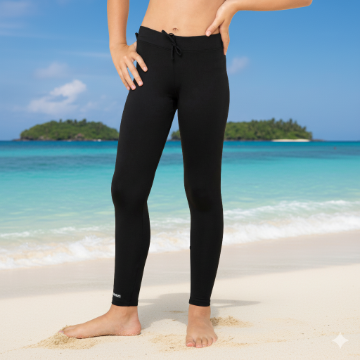
All-Day Flexible Leggings
These leggings were a lifesaver during our climb in Padar and walk in Loh Liang.
They stretch easily, dry fast, and keep you cool under the sun.
Check the same leggings we wore in the vlog:
https://www.twinklesobright.com/product-tag/decathlon/


Female and Male Komodo
Later, we saw a female Komodo resting quietly, and according to Pak Kardin, she was already at her maximum size. She was around 15 years old, her yellowish head blending perfectly with the soil.
Female Komodos usually live up to around 30 years, with the oldest known reaching 32 years. Male Komodos can live much longer, sometimes more than 50, and some are believed to reach 60 or even 70 years old. Male Komodos can grow even larger, up to 3 meters and 20 centimeters long.
Suddenly, the Komodo lifted its head. Pak Kardin said it was watching something. In front of the Komodo, a tourist had walked a little too close. Pak Kardin immediately warned the person to move away. It is very dangerous for anyone to stand in front of a Komodo or walk without their ranger.
Another tourist even left his own group and joined our family. Pak Kardin quickly told him to go back to his group, because this activity is full of risks. He explained that he was only responsible for us, not for other visitors.
After taking photos with the male Komodo, we continued walking. With his trained eyes, Mr. Kardin spotted another Komodo resting under a tree branch. It was almost invisible to us because its body blended perfectly with the soil, dry leaves, and twigs.
Mr. Kardin carefully watched over us and made sure we kept a safe distance from the Komodo. He could even predict where the Komodo would move, so we managed to record a video while it was walking. It was such an incredible moment to see right in front of us.
Today we were lucky, we saw 4 komodos. 2 female and 2 male komodos.
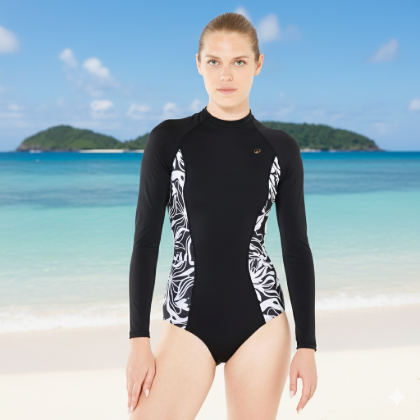
Stay Cool, Stay Protected
The hats and UV-protection gear we used made every sunny stop more enjoyable.
Great for families who love outdoor adventures.
See similar UV-protection items here:
https://www.twinklesobright.com/product-tag/decathlon/


Life on the Island
Komodo Island covers about 390 square kilometers, slightly more than half the size of Singapore. Around 2,000 people live here, mostly local fishermen and families who have lived on Komodo Island for generations. Most are Muslim, while local traditions and beliefs about the dragons remain deeply respected.
There are around 3,000 Komodo dragons in the park, more than the human population.
Komodos are cannibalistic, meaning adult dragons sometimes eat their young. That’s why baby Komodos climb trees immediately after hatching.
Parthenogenesis
They can also reproduce without mating through parthenogenesis, though they usually still mate once a year after a fierce fight between males. Parthenogenesis is a form of asexual reproduction. This means a female Komodo can produce babies from unfertilized eggs, without any genetic contribution from a male. Mating can last from two to four hours, and male Komodos have two reproductive organs but use only one when mating.
Before that happens, male Komodos often fight each other to win against the female. The strongest one becomes the winner. In a way, the male Komodo is quite the gentleman.
That’s why, even in the legend where Orah was the only female, Komodo dragons could still survive until today. Nature gave them this special gift, so their species can continue living on these islands.
The Komodos here are not fed by the park officers or rangers. They live naturally and hunt their own food. Komodos are cannibals. They eat other animals, and sometimes even their own young. Baby Komodos have a natural instinct to run and climb trees right after they hatch, before their own mother can eat them.
So I wonder maybe while we were walking in the park earlier, a baby Komodo could have been hiding above us in the trees???
Since this island’s nature is still so untouched, there are also very dangerous snakes here, but they usually come out only at night. Please be careful if you happen to stay here a bit later.
We played for a while on this beach, and I was curious about the other side of it. When I walked a little farther away, a few rangers called out and asked me not to go there. So I returned to where we had been playing.
It was fine. We did not really know this place well, and sometimes being careful is the wisest thing to do.
Outfit of the Day
Discover our full Komodo adventure gear here:
https://www.twinklesobright.com/product-tag/decathlon/


What Makes Komodo Dragons Unique
- Venom and bacteria: Their bite releases venom that lowers blood pressure and prevents clotting, while bacteria cause infection.
- Camouflage: Their skin matches the color of soil and tree bark, helping them blend into the environment.
- Power: They can run up to 20 km/h for short distances and swim between islands.
- Senses: They use their forked tongue to detect smell and locate prey several kilometers away.
- Size: Komodos can live up to fifty years. They can grow more than three meters long and weigh over seventy kilograms.
- Hunt: Komodos are solitary animals. They usually hunt alone.
- Nest: The female Komodo usually lays her eggs in a hole and guards the nest for several months.
During this time, she becomes very protective. That is why rangers always remind visitors to keep a safe distance if they see a nesting site.
Even though they look calm, they are always alert, Mr Kardin said they look “sleeping but actually they are always ready to catch their prey.”
Bag we used on this trip


Souvenirs and Safe Distance
Before leaving, we bought necklaces made from real Komodo teeth, please note that they are all from animals that died naturally. Komodos are fully protected by the Indonesian government, and no dragons are ever harmed for souvenirs.
Vicky and we ate our packed lunch from the East Cruise in one of the simple local eateries in front of the deep blue water that surrounded Loh Liang. They allowed us to sit and use their table so If you do the same, please remember to support local sellers if you use their tables or shelters, even by buying small snacks or drinks. Btw, we saw this beach from Padar island. The waves here were stronger than at Pink Beach, showing how close the island is to the open Flores Sea.
Outfit of the Day
Our outfits made this trip comfortable and safe.
We wore long-sleeve swimsuits and leggings with 50+ SPF protection that protected us from the sun and worked perfectly for both land walks and snorkeling. For those allergic to sunscreen, this is the best option. Our water shoes were perfect for sand, rocks, and concrete paths.
Shop the same travel outfits here:
https://www.twinklesobright.com/product-tag/decathlon/
Watch the Vlog
Beside this blog, we also made a video for this trip on YouTube.
Filmed on August 11, 2025, using iPhone 16 Pro.
Watch our full Komodo Island vlog with East Cruise on YouTube.
FAQ
Loh Liang is the main entry point to Komodo National Park, located on Komodo Island in East Nusa Tenggara, Indonesia.
Yes, every visitor must be accompanied by an official ranger for safety.
Adult males can reach up to 3 meters long and weigh over 70 kilograms.
Yes, children can visit Komodo Island as long as they are accompanied by adults and a certified ranger. Rangers will choose safe walking routes depending on the group.
Long-sleeve clothing with UV protection and closed shoes or water shoes are highly recommended. These protect from the sun and provide comfort on rocky or hot paths.
The best time to visit is between April and November during the dry season, when the weather is clear, and the sea is calm for island-hopping and snorkeling.


You May Also Like

New Balance 574: Real Classic And Comfortable Sneakers

New Balance 996 Your Timeless Investment
