JKS Benelux Cup 2026: A First Karate Tournament Experience for Kids
Quick Answer
If your child is joining their first karate tournament, you will experience much more than just matches. You will see how your child handles pressure, unexpected moments, and real competition. This kind of experience builds confidence, discipline, and emotional strength beyond winning.
If you are wondering what it really feels like, this was our first karate tournament experience at the JKS Benelux Cup 2026, and it showed us much more than we expected.
Watch the full moment here: https://www.youtube.com/watch?v=VAsfizWVaKA
When My Kids Were Selected for JKS Benelux Cup 2026
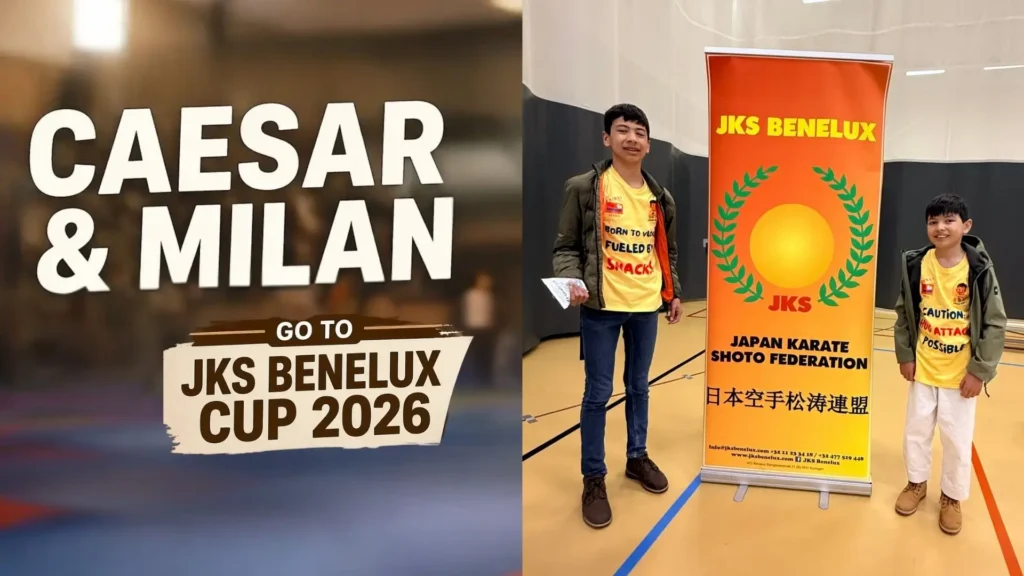
On March 24, 2026, my husband received a message that our children, Caesar and Milan, had been selected to join the JKS Benelux Cup 2026. They were both brown belt karate students, still only 13 and 12 years old.
As parents, we immediately felt proud. Karate is something they truly enjoy, so being chosen for this tournament felt meaningful for their journey and all the effort they had put in so far.
This was their first tournament outside their dojo, and also their first time competing outside the Netherlands. It felt like a new step. Exciting, but also unfamiliar.
As a mother, I had mixed feelings. When Caesar said he wanted to join both kata and kumite, I felt nervous. I think every mother feels that way when it comes to kumite. Even though it is a controlled sport, there is still physical contact. At the same time, I understood that this is part of learning and growing when you choose martial arts.
Training Between School, Tests, and Real Life
Life did not slow down just because there was a tournament coming.
Between school, tests, and homework, Caesar and Milan still made time for extra training outside their regular karate practice. Our dojo is not in Enschede, so every training required planning. The tournament was scheduled for April 19, 2026, in Hasselt, Belgium. We missed a few intensive sessions, but they still managed to attend extra training on April 12 in the evening.
Thankfully, my husband could drive them, and I prepared meals quickly so we could move from one activity to another and still keep a good routine for school days.
We kept reminding Caesar and Milan to listen carefully to their Sensei and work on the mistakes they usually make. Even with limited preparation time, they stayed motivated. They never complained, and they still performed well in their school exams.
In the last week before the tournament, our daily rhythm naturally changed. Everything was adjusted to make sure they were ready.
The Atmosphere at the Tournament
The tournament was held in Hasselt, Belgium, about three hours from our home in Enschede. We decided to stay one night at a hotel near the venue because the tournament would start early in the morning.
When we arrived, the atmosphere already felt different. There were many participants from different dojos, each bringing their own energy.
Some were warming up, some were observing quietly, and others were already fully focused. While waiting for the matches to begin, Caesar and Milan warmed up with their group. At the same time, officials were having their briefing and preparing the event.
One of their Sensei was also part of the officials, and another Sensei even joined as a kata participant. It was interesting to see how everyone played different roles in the same event.
What to Expect from a First Karate Tournament
If this is your child’s first karate tournament, expect a completely different environment from regular training.
There is more pressure, more structure, and less time to think. Everything moves faster, and your child has to rely on what they already know. The Sensei may not always be next to them, so they need to be more independent, even for small things like preparing their uniform and equipment.
Unexpected situations can happen at any moment, often because of nerves. What matters is not avoiding mistakes, but how your child continues when something does not go as planned. That is where real learning begins.
Practical preparation also matters. Bring proper food and drinks. Do not rely too much on the canteen, as options may be limited.
Milan’s Kata: When Plans Change in Seconds
For the kata tournament, participants are free to choose which kata they want to perform.
However, when it was Milan’s turn, something unexpected happened. Each participant has to announce their kata clearly and loudly at the same time. Once it is announced, it cannot be changed.
Milan had planned to perform Heian Nidan. But at that moment, his opponent shouted very loudly, and Milan seemed to react to it. Instead, he said Heian Godan.
For a second, he looked surprised by what he had just said. But he did not stop. He continued with the kata he had already announced.
His movements were clear, his focus stayed steady, and he finished with control, even though inside he felt worried and a little regretful. He kept going. That, for me, already shows a strong mindset.
As parents, we did not notice anything at all during the performance. We thought that was the kata he had planned to show. We only found out after he stepped out of the arena.
In the end, Milan did not win that round. He felt sad, but we were very proud of him. Even though it started with a mistake, he did not freeze. He stayed calm, continued, and finished what he had started. He stayed in control, and I believe this is very important for his real experience.
Milan also joined a second kata category, which was a mixed class where both children and adults were allowed to compete.
What I found interesting is that he was able to move on quite quickly from his first mistake. He performed well again, but his opponent clearly had a higher belt level and more experience. He did not win this second match either.
This time, he accepted it. The difference in skill and experience was clear, and that is also part of the learning process.
Caesar’s Kumite: A Different Kind of Pressure
Kumite is a controlled match. The goal is not to hurt your opponent, but to stay disciplined and score points within the rules. It can look aggressive, but it is structured and supervised.
As a mother, there is not much you can control in that moment except trusting the training and the system.
Caesar competed twice, with Sensei Kirsten standing near the arena to support him.
During his second match, Caesar felt pain in his thumb. He believed it might be sprained. Even so, he decided to continue and finish the match. From where we stood, we could not see anything unusual.
Later, I realized I was watching a child pushing through discomfort in a high energy situation. That is something you only truly see during competition.
This is where the difference between training and competition becomes clear. The pressure, the timing, and the intensity all change.
After the Match: What Happens Behind the Scenes
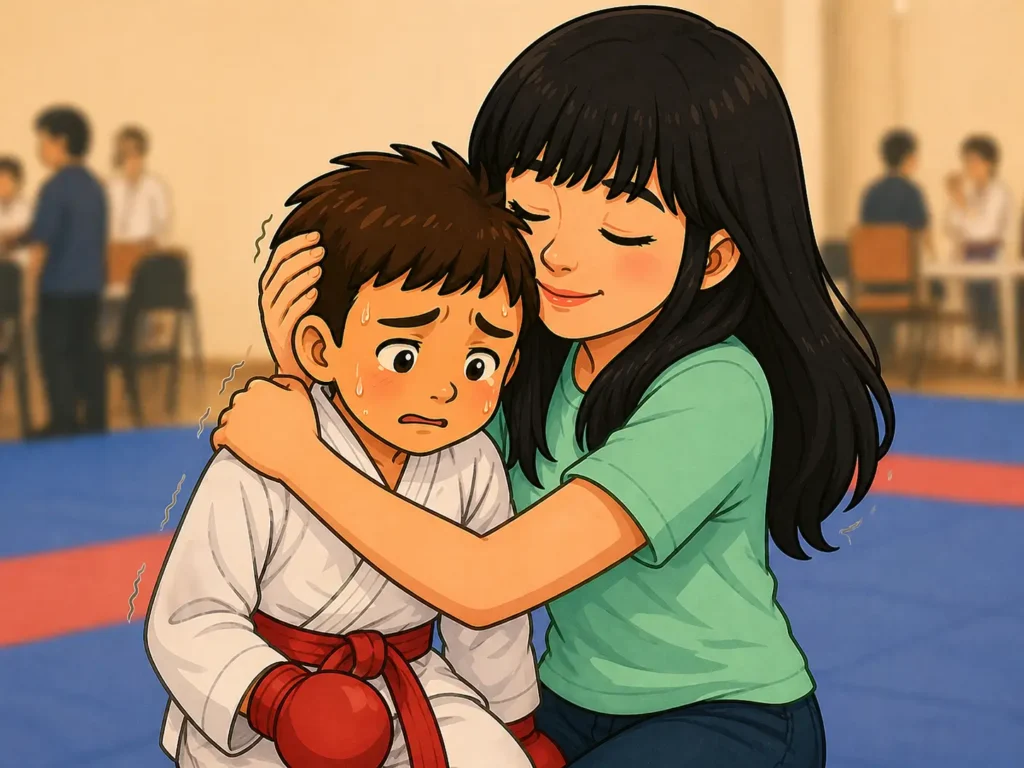
After both matches were finished, Caesar came to me. His body was shaking. I hugged him right away. At first, I thought it was just adrenaline, but then he told me that his thumb was in pain.
I asked him to wash his hands so I could check it, but he refused. He wanted to wait until the winner announcement.
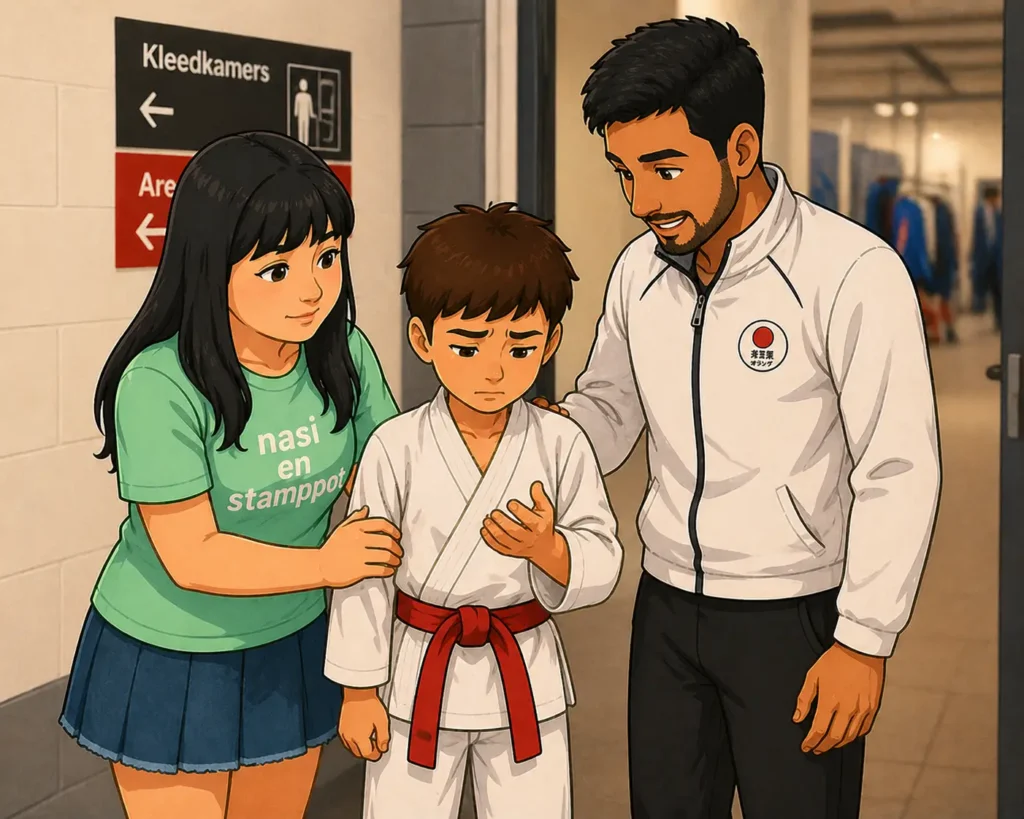
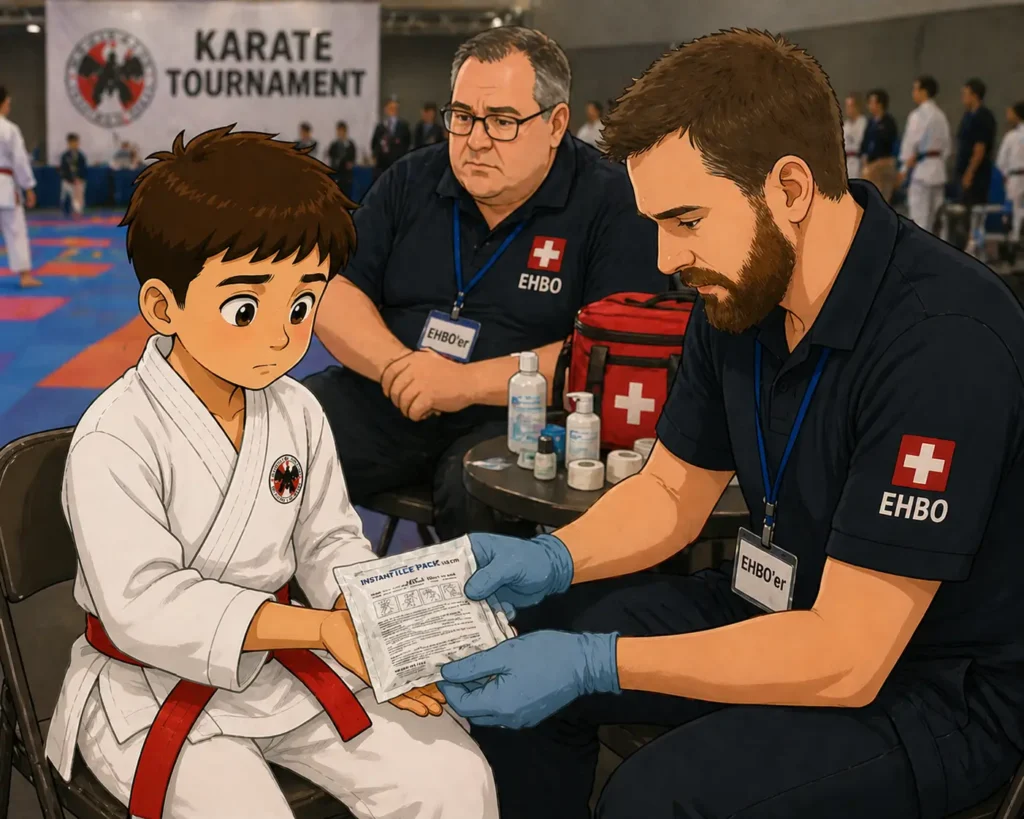
After the announcement, he could not hold it anymore. He went to clean his hands, and then we met his Sensei, Sensei Ralph, who helped bring us to the first aid staff.
The palm area around his thumb was already very swollen. At that moment, we were worried there might be a fracture or something more serious.
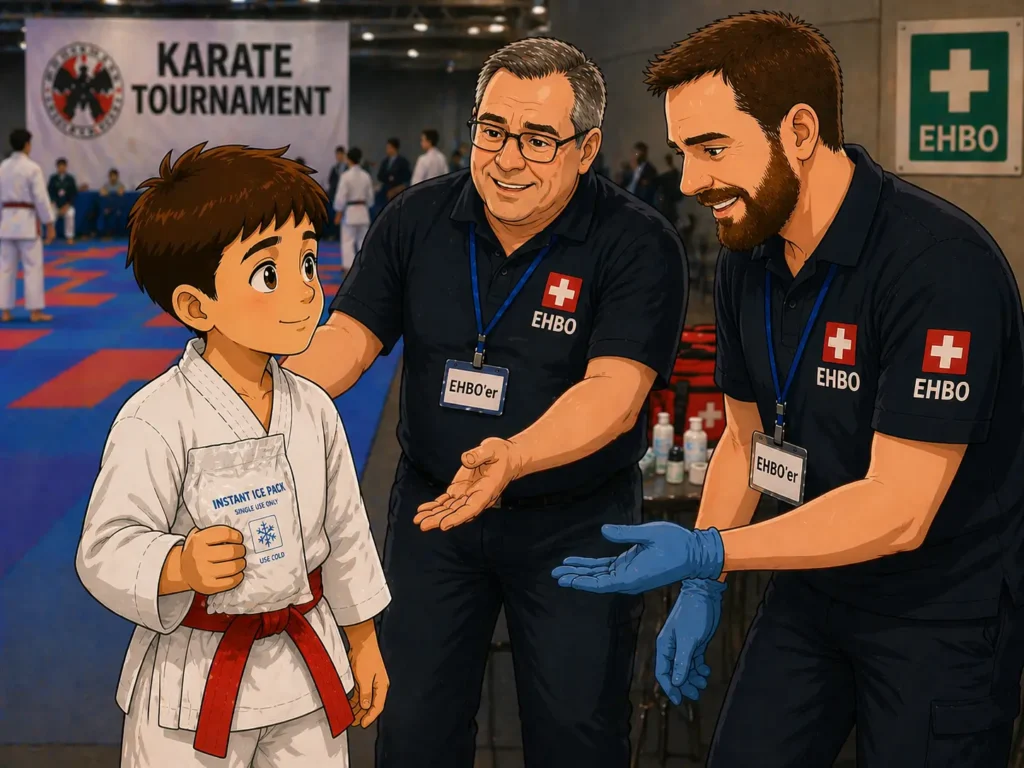
He received several ice compresses. There were four bags of ice used, and slowly the swelling started to go down.
We were advised to contact a doctor once we reached the Netherlands, as the drive from Belgium would take around three hours.
The Journey Back Home
The drive back from Belgium to the Netherlands took around three hours.
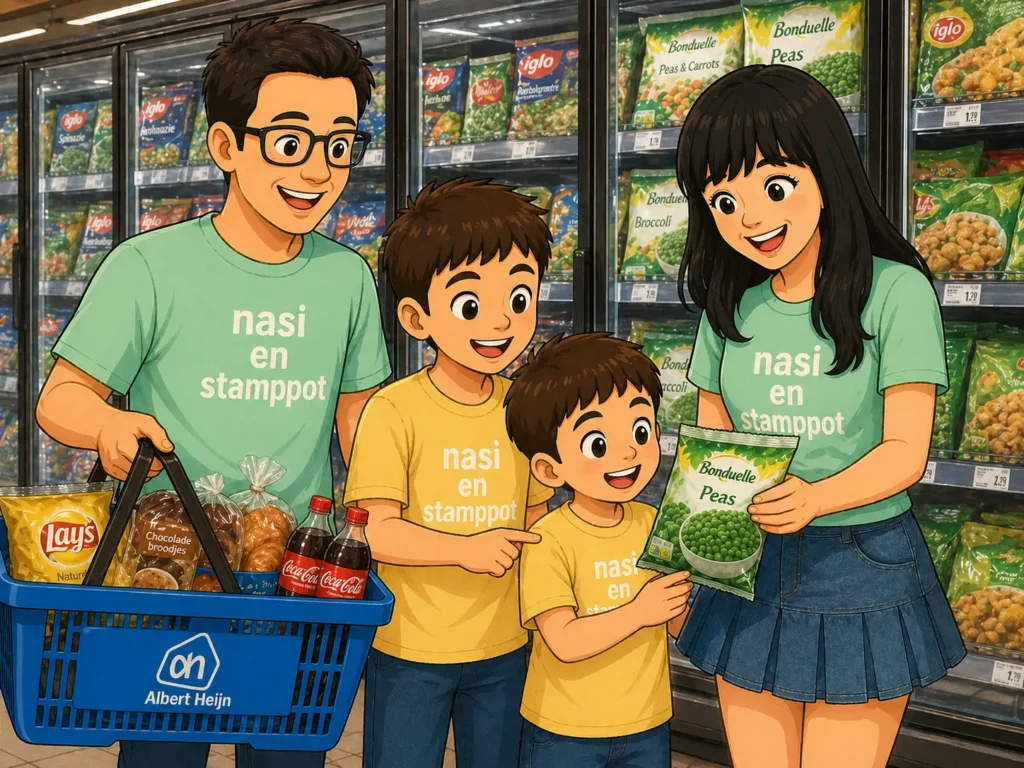
We had not had lunch yet, so I asked my husband to stop at a supermarket. We bought some bread and also something we could use as a compress. Since the ice from the first aid would not last long, I bought a small bag of frozen peas.
We used the frozen peas as a compress during the journey until we reached home. Along the way, I kept monitoring Caesar. He was still in pain, but his condition looked stable and under control, so I did not feel the need to rush urgently.
The swelling had already reduced by the time we arrived home. It was still painful when he moved his thumb, but it was much better compared to a few hours earlier.
The next morning, Caesar still could not move his thumb properly. I took him to the doctor, and he was referred for an X-ray. The doctor did not expect it to be serious, but to be sure, we went for the X-ray immediately without an appointment.
Thankfully, the result showed nothing serious. It was only a bruise, and it would recover within a few days. We went home feeling relieved. It took about four days before Caesar could use his hand normally again and write properly.
We also recorded this entire journey on YouTube. If you want to see the real situation during the JKS Benelux Cup, you can watch it here: https://www.youtube.com/watch?v=VAsfizWVaKA
What Your Child Learns from a First Karate Tournament
You see how your child handles pressure
Training is one thing. Competition shows a different side.
Mistakes become part of the process
What matters is how your child continues after it happens.
Discipline becomes visible
Karate is not about fighting. It is about control, respect, and awareness.
Your support matters more than results
What you do before and after the match shapes the experience.
How to Prepare Your Child for a Karate Tournament
- Focus on consistency
Regular training matters more than trying to be perfect.
- Balance school and training
Make sure your child has enough time to rest and recover.
- Prepare mentally
Talk about possible situations, including unexpected moments.
- Set realistic expectations
Help your child understand that experience is just as important as results.
Practical Tips for Parents
- Bring simple meals and drinks because tournament days are long
- Prepare basic first aid items for small injuries
- Stay calm because your child will follow your energy
- Give your child time after their match to process
- Focus on effort and courage, not only results
FAQ
Kata is a sequence of movements performed individually. Kumite is a controlled sparring match with an opponent under strict rules.
Yes, kumite is performed with protective gear and supervision. The focus is control, not harm.
Mistakes happen. What matters is how your child continues and finishes the performance.
Stay calm, encourage effort, and be present after the match.
Mixed categories can be challenging, but they also help children learn faster.
A Real Perspective for Parents Considering Karate
For us, competition was never only about medals. It was about courage, and how our children face pressure, unexpected moments, and real emotions in situations they cannot fully control.
As a mother, I have learned to be ready for the possibility of injuries, both physical and emotional. That is part of choosing a sport like karate. Supporting your child mentally and physically does not stop on tournament day. It continues long after the matches are over.
Because what they carry from an experience like this is not a trophy. It is confidence, resilience, and the quiet knowledge that they can keep going even when things do not go as planned.

This article does not use traditional cookie based affiliate links. Twinkle So Bright works through transparent paid collaborations, such as sponsored stories or natural link placements that align with the content. If you are interested in collaborating on this specific article, feel free to contact me to discuss availability and rates.


You May Also Like

Wild: A Small Switch with a Big Impact

When Search Became Human: The New Rules of SEO in the Age of AI